
Two Kiwis Are Enough, the Simplest Scientific Habit for Changing Your Skin
A study has found that adding just two kiwis to your daily diet can enhance your skin’s health. This fruit, known for aiding collagen production and improving skin thickness and regeneration, is gaining attention as a ‘natural prescription’ for restoring elasticity and vitality without dermatological procedures.
Firm Skin, Science Made with ‘Gold Kiwi’
The skin is one of the first body parts to show signs of aging. Particularly, as collagen decreases, the skin becomes thinner and more prone to wrinkles, a process that is an unavoidable aspect of natural aging. The University of Otago in New Zealand focused their research on the relationship between skin health and dietary vitamin C.
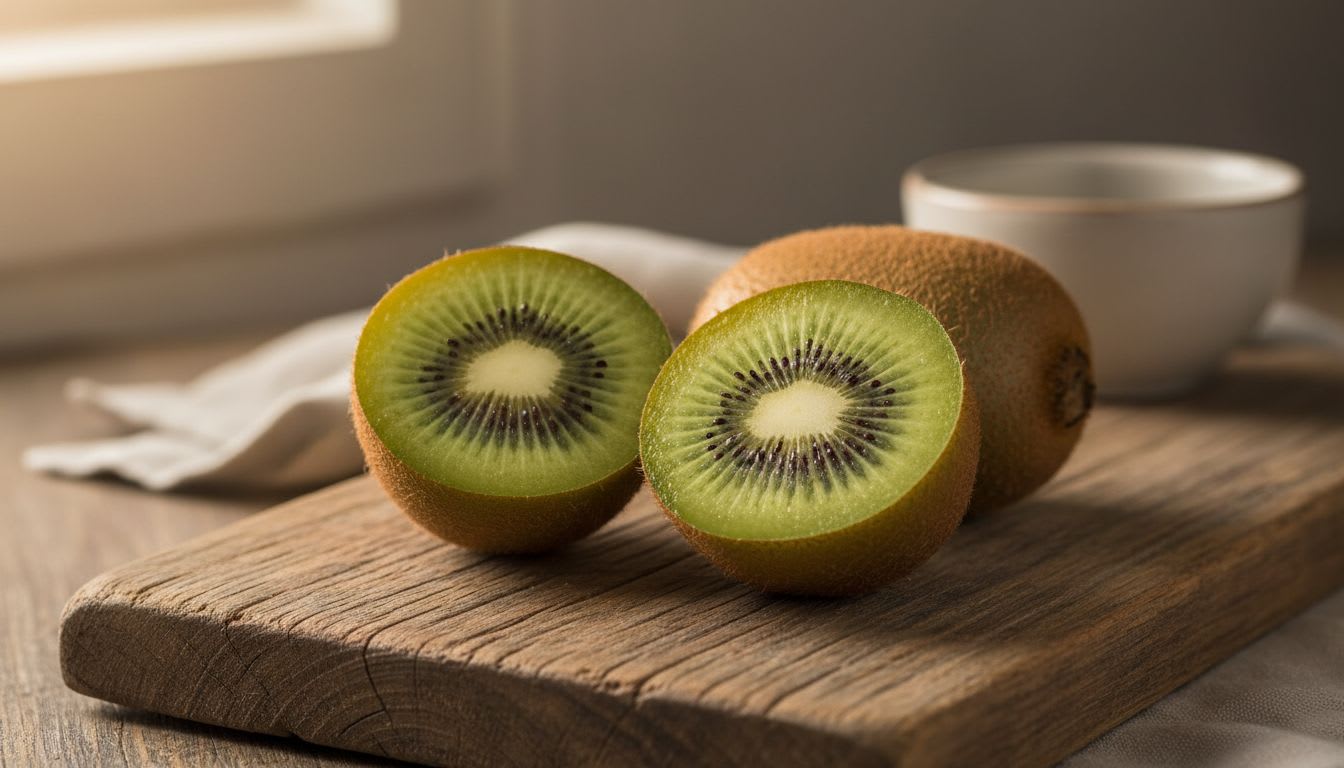
The research team conducted experiments using ‘SunGold’ kiwis, which are exceptionally rich in vitamin C, and participants consumed two gold kiwis daily for eight weeks. This intake is equivalent to an additional 250mg of vitamin C per day, the same as consuming 3.5 medium-sized oranges, 10 large strawberries, or 8 mandarins.

24 Participants Showed Common Skin Improvements
The experiment involved 24 healthy adults residing in Christchurch, New Zealand, and Hamburg, Germany. Their skin tissues were compared and analyzed before and after the experiment, and the results were clear. Positive changes were observed in all skin layers, from the dermis to the epidermis, as the body’s vitamin C concentration rose.
“All experiment participants experienced an increase in skin thickness, and their skin tissue’s self-regeneration capacity improved.”
As collagen production was activated, the skin gained structural thickness, and increased cellular regeneration in the epidermis resulted in healthier, more vibrant skin tones. The elevated vitamin C concentration in the blood meant more vitamin C was delivered to skin cells.
Does Dietary Vitamin C Really Reach the Skin?
Many people wonder, ‘Do the nutrients we eat really reach our skin?’ Skin is the outermost organ, so delivering nutrients via the bloodstream can be complex in terms of time and mechanisms. However, this study provides a clear answer to that question.
The research showed that following kiwi consumption, both the skin tissue and plasma of participants had a significantly increased concentration of vitamin C, which directly affected all skin layers. Collagen production in the skin was also stimulated by this rise in vitamin C.
“The skin reflects dietary changes much more quickly than we think.”
This insight comes from Professor Margreet Vissers, the study’s lead researcher, who emphasized that skin may respond more sensitively to dietary changes compared to other organs.
Which Is More Effective: Eating Vitamin C or Applying It in Cosmetics?
Many use creams or serums containing vitamin C for skincare. However, the research team explained that dietary intake can deeply and widely affect the skin more than topical application.
The outermost layer of the skin, the stratum corneum, acts as a waterproof barrier composed of lipids, making it difficult for the water-soluble vitamin C to be absorbed there. Moreover, vitamin C is sensitive to oxidation, losing effectiveness upon exposure to air, while dietary consumption allows it to reach deep skin layers effectively via the bloodstream.
Collagen Supplements? Direct Production Is the Answer
While collagen supplements have gained popularity as skin health products in recent years, there isn’t sufficient scientific evidence supporting their replacement of skin collagen. Professor Vissers commented on this issue:
“Believing that taking collagen supplements will increase skin collagen is a misconception. Skin collagen is produced directly by skin cells.”
The crucial factor in collagen production is not the raw material itself but the promoter of collagen synthesis, and vitamin C effectively fulfills this role. Therefore, consuming vitamin C-rich foods regularly is a more scientifically sound method for skin health than relying on collagen supplements.
Easy Sources of Vitamin C, You Can Change Now
Vitamin C is broadly available in many common foods. Gold kiwi, bell peppers, capsicum, broccoli, strawberries, and citrus fruits are all well-known for being rich in vitamin C. Including these foods in your daily diet can add vitality and energy to your skin.
Dietary intake is not just confined to skin health. It can positively impact overall health, including strengthening immunity, protecting cells, and reducing inflammation. Therefore, a vitamin C-rich diet is a foundational health strategy recommended for everyone.
The importance of vitamin C for skin health has been proven through research results. strives to deliver natural and healthy beauty to you.
