Shopping and skin care… Foreigners spent ‘1 trillion won’ in Seoul
April card spending by foreign tourists visiting Seoul reaches KRW 1.1532 trillion
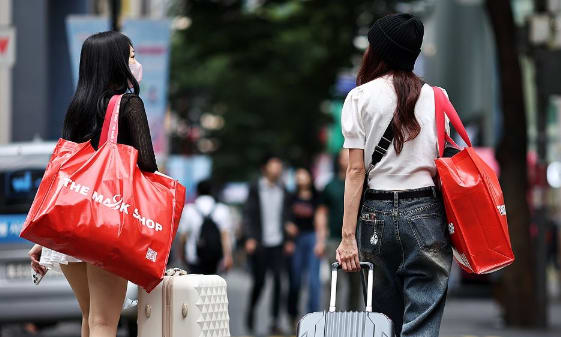
The number of foreign tourists visiting Seoul continues to rise without slowing down. Their offline spending is also growing rapidly, bringing fresh momentum to the beauty and shopping industries overall. Moving beyond simple sightseeing, foreign visitors have become active consumers, and their spending patterns reveal a new paradigm for Seoul tourism.
The power of K-beauty and shopping, foreign spending surpasses 1 trillion won
Influx of foreign tourists and concentration of offline spending in Seoul
During the month of April, the number of foreign tourists visiting Seoul reached 1.56 million. This is an 18.8 percent increase from 1.3 million during the same period last year, clearly demonstrating a strong recovery. The cumulative number of tourists from January to April this year also reached 5.2 million, up 21.4 percent year on year.
Accordingly, card spending by foreign tourists in Seoul reached KRW 1.1532 trillion, a sharp 50.5 percent increase from last year. During this period, total foreign card spending nationwide was estimated at KRW 1.9992 trillion. Excluding online spending of KRW 397.4 billion, Seoul accounted for as much as 72.3 percent of total offline spending. In other words, most inbound tourists are opening their wallets around Seoul’s major commercial districts and wellness infrastructure.
Spending patterns centered on shopping and medical-wellness
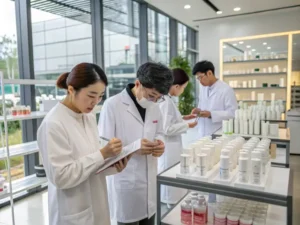
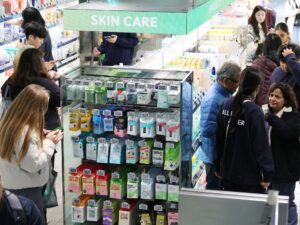
An analysis of spending by industry shows that expenditures at large shopping malls reached KRW 245.2 billion, up 62.5 percent from last year, marking the largest growth. Medical tourism spending led by dermatology clinics and plastic surgery clinics followed at KRW 192.1 billion, up 59.2 percent, while spending in beauty sectors such as cosmetics also increased by 35.0 percent.
In terms of overall spending share, shopping accounted for nearly half at 45.4 percent, followed by the medical-wellness sector at 24.8 percent, food and beverage at 13.1 percent, and lodging at 11.0 percent.
Spending concentration by district and diversification of tourists
Gangnam-centered spending landscape and influx from major Asian countries
The area where tourist spending was most active was Gangnam-gu in Seoul, which ranked highest among all districts with a 29.1 percent share. Jung-gu, home to Myeong-dong and Namdaemun, followed closely at 27.5 percent, followed by Mapo-gu at 7.4 percent, Seocho-gu at 6.5 percent, and Jongno-gu at 5.5 percent. This shows that the Gangnam area, where K-beauty therapy and medical infrastructure are concentrated, has firmly established itself as a core spending hub for foreign visitors.
By country, Chinese tourists accounted for the largest share with 440,000 visitors, followed by Japan with 230,000 and Taiwan with 150,000. In particular, Taiwanese tourists increased by 34.4 percent compared to the same period last year, showing strong growth potential.
Explosive domestic demand boost driven by the holiday season
During the holiday period from April 29 to May 6, the number of Japanese and Chinese tourists visiting Korea reached 112,000 and 108,000 respectively. In a short period of time, they generated as much as KRW 437.6 billion in card spending, contributing significantly to the revitalization of the domestic market. The number of visitors increased by 40.7 percent from the same period last year, while card spending also rose by 37.9 percent, showing that the holiday boom delivered a strong impact.
High-value strategy for future qualitative growth
Differentiated beauty experience content and advanced infrastructure
In addition to the quantitative expansion of the tourism market, qualitative growth centered on high-value products such as beauty and medical services is also becoming increasingly visible.
“The fact that foreign tourists visiting Seoul reached 1.56 million in April and tourism spending surpassed 1 trillion won is an indicator that proves the clear qualitative and quantitative growth of Seoul tourism. We will continue to advance high-value tourism content unique to Seoul, including K-culture, gastronomy, and medical-beauty services, along with convenient tourism services, to bring forward the era of 30 million inbound tourists.”
To turn this trend into a long-term growth engine, the Seoul Metropolitan Government plans to establish differentiated beauty experience content and an advanced convenience service system. The paradigm of tourism consumption is evolving beyond simple product purchases into direct experiences with high-performance beauty care and professional medical services. This high-value consumption structure is providing new opportunities for growth to the domestic beauty and aesthetic industries.
The spending structure of foreign tourists visiting Seoul is rapidly shifting from simple shopping to high-value wellness and beauty experiences. The strong medical-beauty ecosystem formed around Gangnam and central Seoul is expected to become a differentiated competitive advantage in the global market going forward.
Based on this growth momentum, the continuous quantitative and qualitative advancement of service infrastructure is expected to drive the ongoing attraction of inbound tourists.
Amid the K-beauty boom, global tourists are showing stronger interest than ever in high-quality cosmetics. Trusted partner “ will support differentiated product development and practical solutions, standing firmly alongside domestic and international brands so they can strengthen their competitiveness in the global beauty market.