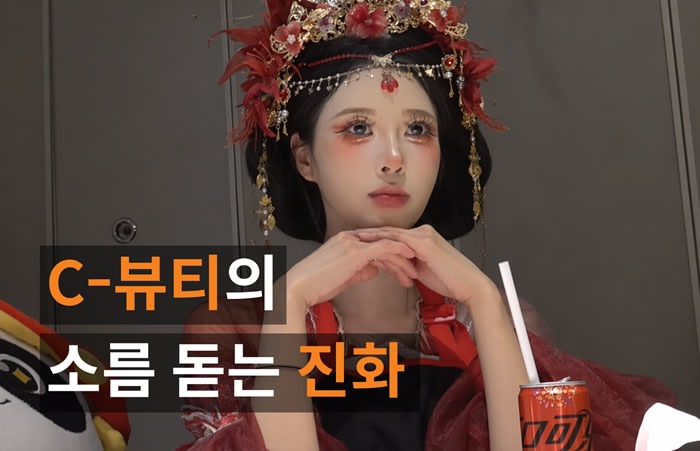
Wanghong Makeup, Not Just a Passing Trend
Once overshadowed by K-Beauty and considered a follower, C-Beauty is now leading the global market with its unique path. Through rapid planning, digital operating methods, and sophisticated branding and localization strategies, C-Beauty is changing the market dynamics and prompting K-Beauty to make strategic pivots.
C-Beauty Leads the Global Market
Just a few years ago, Chinese beauty was merely a ‘follower’. While K-Beauty, having conquered the world, enjoyed the spotlight, Chinese brands felt like supporting actors in the background. However, Chinese brands are no longer just following in the global beauty market. They are making their own rules and confidently stepping forward.
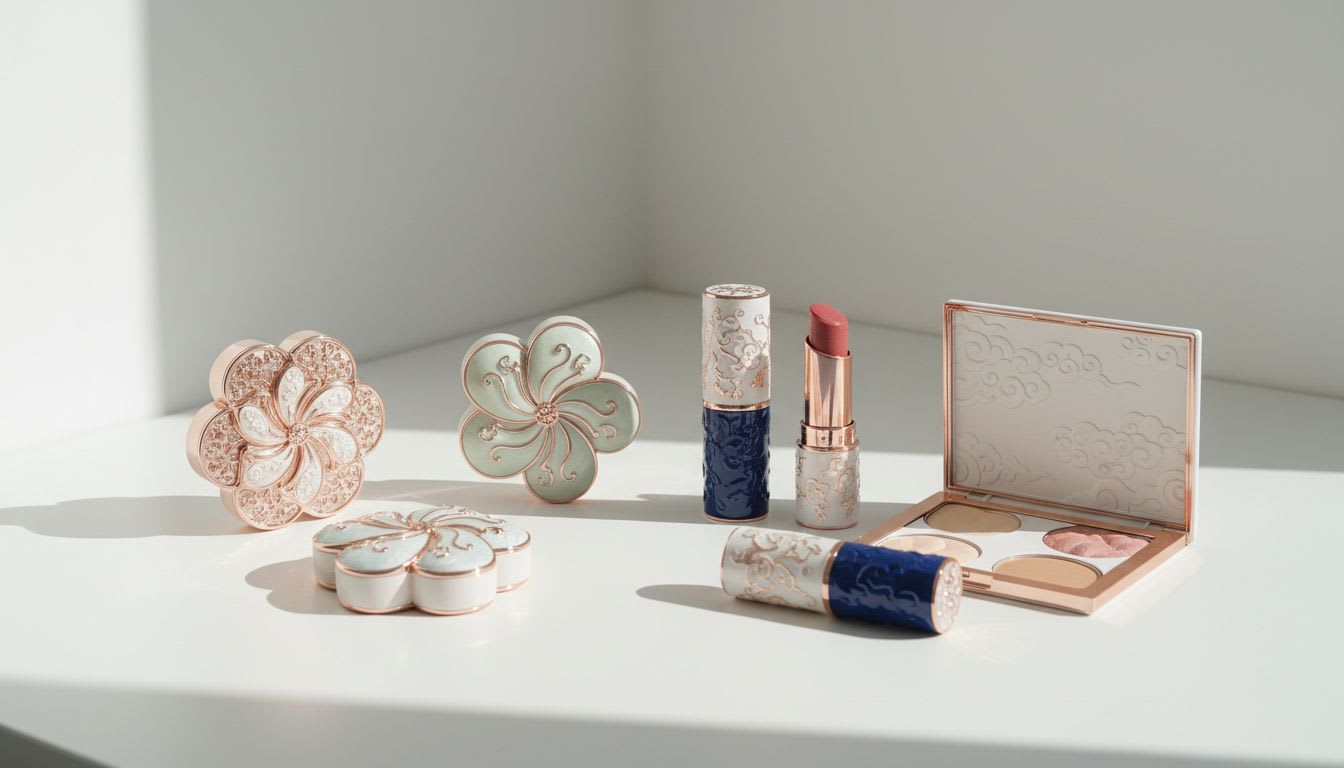
In November 2025, a pop-up store of a Chinese makeup brand opened in Seongsu-dong, Seoul, with a massive turnout from young Korean cosmetics enthusiasts. Flower Knows products, boasting splendid yet intricate packaging and practical usability for everyday wear, captured the attention of notoriously picky Korean consumers instantly.
Huaxizi, leading the Guochao wave by modernly reinterpreting traditional Chinese aesthetics, has opened formal stores at Ginza Six in Japan and French department stores, with the presence of Chinese brands rapidly expanding on Amazon US. C-Beauty’s global expansion is now following the path K-Beauty took but on a much wider scale.
A particularly notable point is that in Southeast Asia, C-Beauty has already begun to outpace K-Beauty. Though currently limited to certain countries and makeup categories, a reversal in the skincare area also seems inevitable. Until recently, the prevailing belief was that Chinese cosmetics had a long way to go to catch up with Korean cosmetics, but C-Beauty has now reached a point where it stands shoulder to shoulder with K-Beauty, moving past the perception of it as a follower.
The Power of a Dynamic Digital Ecosystem
How was C-Beauty’s remarkable growth possible? It stems from China’s unique dynamic online ecosystem. In an environment where companies fiercely compete to survive in a huge domestic market of 1.4 billion people, thousands of brands emerge and vanish each year. Surviving brands naturally acquire agile planning capabilities, swift product development, and excellent responsiveness to real-time consumer feedback.
In China, 70-80% of cosmetics purchases occur online, making it one of the fastest digitally transformed markets globally. Most Chinese cosmetics brands are digital natives that analyze consumer responses in real-time and have capabilities in D2C (Direct to Consumer) type operations. This domestic market, constantly experimenting with new categories, formulations, and positioning, acts as a massive ecosystem that continually sprouts and nurtures brands. It serves as an incubator that repeatedly tests, proliferates, and weeds out while ceaselessly raising brand quality.
Core Competitive Edge through Systematization
The true competitive edge of C-Beauty lies not just in dazzling design or superior cost-effectiveness. Its strength originates from a robust system. A vast pool of brands based on a domestic market of 1.4 billion, enormous capital supporting them, and a unique structure where global content platforms like TikTok integrate seamlessly with global commerce and logistics platforms such as Temu, AliExpress, Shopee, and Shein.
These platforms act like a ‘digital silk road’ for C-Beauty’s overseas expansion. Additionally, the network of Chinese expatriates, numbering around 70 million worldwide and deeply rooted in the Southeast Asian economic sphere, further accelerates the spread of C-Beauty. The vast content continuously produced by over 100 million Chinese TikTokers and overseas Chinese introduces and reviews C-Beauty products, acting as a powerful catalyst for its global spread.
Evolving Branding Capabilities and Localization Strategy
Unlike K-Beauty which has entered the global market riding the wave of the Korean Wave, Chinese brands had to prove their competitiveness without such a crutch. This environment served as fertile ground for rapidly growing C-Beauty’s branding capabilities. Chinese companies could not survive without thorough market research and consumer understanding, continuously refining their branding sophistication.
Recently, C-Beauty has moved beyond simple product-based competition, entering a stage where it builds brand meaning and narrative. Shedding the old ‘cheap-copy’ image, it has started establishing sophisticated branding systems that combine brand philosophy, style, cultural assets, and localization capabilities. The ability to define what a brand symbolizes and persuasively convey that worldview to consumers has become a core competitive strength.
Chinese brands set their core axis of ‘philosophy-worldview-style’ right from the initial planning stage. Mao Geping has established itself as a premium brand by reinterpreting traditional Chinese aesthetics into modern makeup, and Huaxizi has popularized Chinese aesthetics through its oriental artistic packages. Guanxia unrolls the senses of seasons and nature with fragrances, expanding as a lifestyle brand. These brands adeptly elevate ‘Chineseness’ to a core asset of their identity, rather than just decoration.
Significant changes are also appearing in ingredients and formulations. Moving away from ODM shared formulas, a trend is emerging to develop unique ingredients and raw material stories tied to brand philosophy, and actively reflecting them in formula design. The consistent structure that connects worldview to functionality, and functionality to user experience is being strengthened. Design capabilities have also evolved rapidly. Chinese cosmetics companies create unique molds instead of universal packages to visually implement the brand’s worldview perfectly. The intricate engraving packages of Huaxizi and the fairy-tale design of Flower Knows symbolize the diversity and distinction of C-Beauty, forming strong brand fandoms.
Another decisive advantage of C-Beauty is its global localization strategy. Beyond simple product exports, it meticulously designs market-specific strategies that thoroughly consider local climate, skin concerns, lifestyle routines, and economic levels. Skintific, which has grown rapidly in Southeast Asia, built a ‘market-specific brand’ by thoroughly analyzing the hot and humid environment and local skincare routines, and has successfully positioned itself to be perceived as a domestic brand by local consumers.
A New Strategic Turning Point for K-Beauty
In response to the brilliant evolution of C-Beauty, it’s time for K-Beauty to make strategic shifts. First, moving beyond product-centric thinking is essential. The production capabilities of Korean ODM have already become a global common asset, and maintaining differentiation through ingredient and function-centric price competition alone is becoming increasingly challenging. While the Korean Wave remains a strong asset, merely having the ‘Made in Korea’ title is insufficient to fully explain a brand’s allure. By deeply reflecting Korean culture and lifestyle to construct unique brand philosophy and style, K-Beauty must evolve beyond products to true K-Brands.
Second, a flawless localization strategy tailored to overseas markets is crucial. Beyond simply exporting products that were hits domestically, products, and brand experiences optimized for local climates, cultures, and lifestyles must be intricately designed. The thorough localization strategy that C-Beauty successfully showcased in the Southeast Asian market will serve as a crucial reference for K-Beauty. Lastly, focusing beyond short-term performance marketing to design long-term relationships between brands and consumers is necessary. In an environment where advertising costs continually rise and marketing efficiency declines, sustainable growth ultimately hinges on solid branding. Only brands that deeply understand consumers and naturally embed themselves in their culture and daily lives can survive and thrive in the fiercely competitive global market.
In Closing
The remarkable rise of C-Beauty is by no means a mere coincidence or temporary phenomenon. It is the result of a structural power that continuously experiments with brand philosophy and worldview on a dynamic digital ecosystem, implements them precisely in design and formulation, and innovates ceaselessly to suit the characteristics of the global market. These changes pose a critical question about what systems and language we should build brands with in the future, offering answers that will be the key criteria for understanding the future beauty market.
The rise of C-Beauty presents a new standard in the global cosmetics market and poses crucial questions about the direction for domestic beauty brands. We at stand ready to provide reliable insights and practical support to help companies identify the key criteria for reading the future beauty market and build excellent branding strategies amidst these trends.