According to a report released by the Korea Cosmetic Industry Institute in 2023, the domestic functional cosmetics market has surpassed half of the overall cosmetics market. This signals that consumers are now choosing creams with expectations for specific effects such as brightening and wrinkle improvement, beyond simple hydration. At the center of this shift lies the question of how ingredients and formulas are designed.
How Cream Meets the Skin
Cream may seem like the final step placed on the skin, but in reality, it is a key step that determines how ingredients interact with the skin barrier. The concept of cosmeceuticals, which first appeared in the 1980s, began with the possibility that cosmetics could go beyond simple appearance care and even have pharmacological action.
The way a cream formula realizes that possibility is not simple. For active ingredients to be delivered deep into the skin, an emulsion structure is needed, meaning a formula in which moisture and oil are balanced and combined. If the formula is unstable, ingredients remain on the skin surface and disappear, and even the finest raw materials may not produce the expected changes. What matters is not only which ingredients are included, but how the way those ingredients reach the skin is designed.
The Difference Made by Content and Combined Action
In brightening functional cosmetics, the content of ingredients and the way they act in combination create a more practical difference than the type of ingredient alone. According to the standards of the Ministry of Food and Drug Safety, niacinamide is designated as a brightening ingredient at a content of 2 to 5%. The announced standard is the minimum condition for efficacy, not the optimal condition. In actual product design, results vary depending on the level at which this standard is applied and which ingredients it is placed together with.
Le Biel Intense Crystal Lightning Cream sets niacinamide at 10%, the upper level of the announced standard, and combines it with 3% tranexamic acid, glutathione, and BTS③ Complex. Tranexamic acid helps inhibit the melanin production pathway, while glutathione helps even the skin tone through antioxidant action. In the cosmeceutical cream market, the understanding is taking root that when ingredients with different mechanisms work together rather than relying on a single ingredient, the depth of the brightening effect can change.
How YURICO5 Creates Creams
YURICO5 has created creams through a collaborative structure, working with specialized companies in each field throughout the entire process from product planning to formula research and commercialization. It is not a method of making products quickly alone, but a method of slowly designing them together with partners who have craftsmanship.
The proprietary patented ingredient born from this process is a combination of extracts from centella asiatica, stevia, and taro, and it is the result of patenting the synergy between ingredients rather than a single raw material Patent No. 10-2510978. The patented anti aging ingredient Hupura-THA was also developed in the same context.
Creams containing these ingredients embody the possibility of home self care, allowing cosmeceutical level care at home without visiting a dermatologist or aesthetic clinic. One jar of cream used every day can mean more than simple hydration, and that possibility is what confirms why YURICO5 has focused on ingredients and formulas.
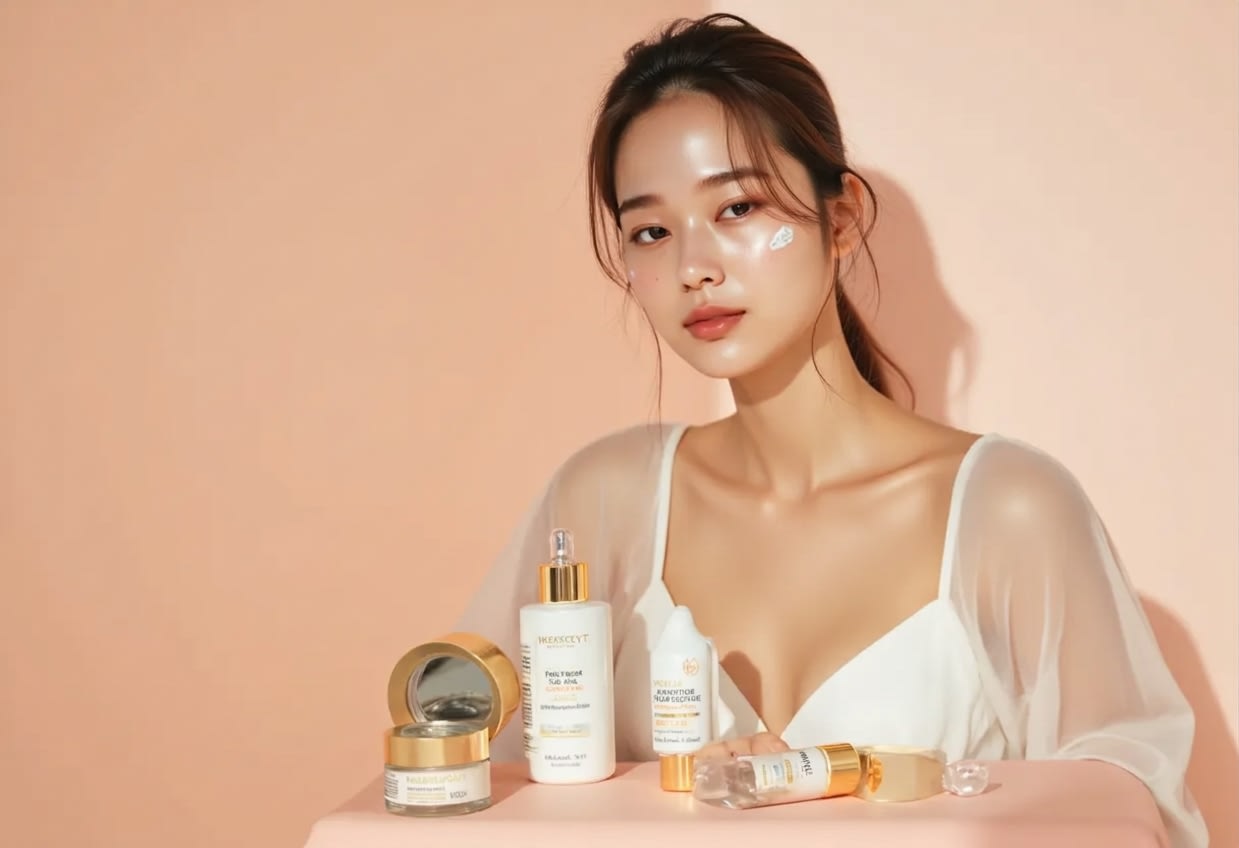
The standard for choosing a good cream ultimately leads to the questions hidden behind the ingredient list. How much of this ingredient is included, which ingredients it works with, and how its contact with the skin has been designed. The way each product answers those questions is different, and when those differences accumulate every day, they appear as changes in the skin.
