As Japanese brands waver in China’s premium cosmetics market, Korean beauty brands are gaining fresh attention. The potential for import regulations on Japanese products has surfaced, sparking interest in how this could tilt the premium market in favor of Korea.
Recently, there has been controversy surrounding the “Korean-Japanese Bill” issue in China, along with the possibility of import restrictions on Japanese cosmetics. This is threatening the long-standing presence of Japanese brands in China’s premium cosmetics market. As these brands, which have maintained a robust market share based on solid quality and reputation, are weakened, the market is looking for new alternatives.
Despite the overall stagnation of the cosmetics market in China, demand for premium beauty continues to rise. According to global consulting firm McKinsey, China’s beauty market grew by only 3% in 2023, but there was an upswing in average selling prices due to a preference for premium products. The market is expected to grow by nearly 6% annually over the next five years, driven by premium and luxury products.
“There is a sufficient possibility for Korean brands to partly absorb the market gap created by the wavering Japanese brands.” This is the analysis from industry insiders.
The current structure of China’s beauty industry features a bifurcation between prestige global brands and local and indie brands. As of 2024, Korea ranks as the third-largest cosmetics importer to China, following Japan, and as the second largest Asian country. Apart from France, it essentially solidifies its position as the most influential Asian beauty exporter.
However, it’s not just about having opportunities. The rapid growth of Chinese local brands is an undeniable variable. According to the Chinese market research firm CBNData, local brands already account for more than half of the revenue in China’s cosmetics market. They are especially broadening their influence by focusing on ingredients, efficacy, and riding the wave of patriotic consumption.
Local brands’ competitiveness is continually strengthening in areas like digital marketing, branding technology aimed at the young Gen Z, and the development of locally customized products. Therefore, the vacancy left by Japanese brands cannot be assumed to be filled by Korean brands without challenge.
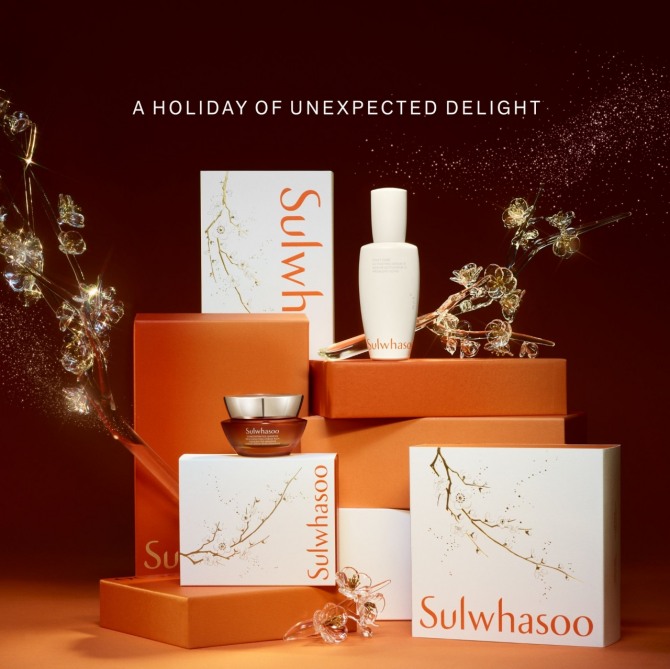
Leading premium K-beauty brands Amorepacific and LG Household & Health Care are adopting slightly different strategies. Amorepacific has been decisively restructuring to eliminate inefficient distribution channels and low-to-mid-priced brands in China, moving towards a strategy focused on exiting China (‘China exit’). They are seeking substance by reorganizing their portfolio around high-end lines like Sulwhasoo, Hera, and Laneige.
Conversely, LG Household & Health Care remains significantly dependent on the Chinese market, with 40% of its sales derived there. It is trying to enhance its structure by prioritizing its premium Oriental Medicine brand ‘The History of Whoo’. It is also seeking new avenues by reducing brands with declining sales like Ohui and Su:m, and by expanding digital channels such as live commerce and online malls.
*”Transitioning towards a focus on premium brands is crucial, and both restructuring and a digital strategy are simultaneously required.”* This analysis is gaining persuasive power.
Among the greatest threats K-beauty faces in the Chinese market is the rapid emergence of domestic brands. In contrast to a few years ago when they focused on a ‘mid-to-low price advantage’ emphasizing price-performance ratios, Chinese local brands are now aggressively investing in R&D and developing premium lines.
Especially with a new consumer base centered around Gen Z, there is more emphasis on aesthetic appeal, digital touchpoints, and immediate efficacy rather than the traditional legacy of the brand. Consequently, the critique arises that relying solely on the ‘Hallyu’ premium is no longer sufficient to provide a clear choice.
“The era when being a K-brand alone was enough to be chosen is over. Market-tailored strategies are the current reality of K-beauty.” As assessed by industry experts.
“ is leading the future of Korea’s cosmetics industry, elevating the value of our products in the global market based on quality and trust. By keeping an eye on market changes, we aim for sustainable growth with differentiated strategies.