Core of Cosmetic Competitiveness, ‘Delivery Methods and Structure Design’
Cosme Week Tokyo 2026: Analysis of R&D, Materials, and Product Trends
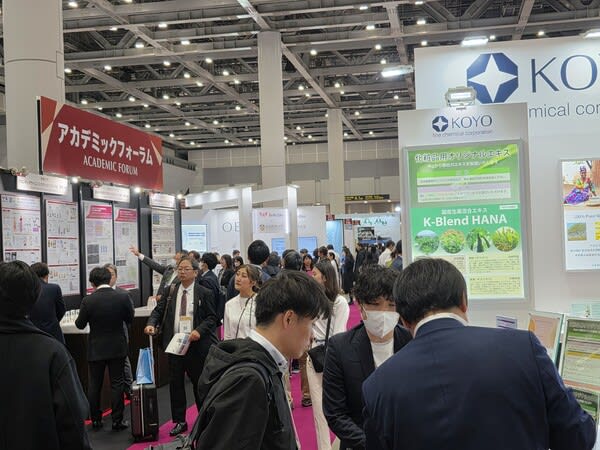
At Cosme Week Tokyo 2026, ‘Delivery Methods and Structure Design’ emerged as a key keyword for glimpsing the future of the cosmetics industry. The focus of research and development extends beyond merely creating innovative ingredients, centering on how these ingredients interact with and are absorbed by the skin, involving a sophisticated restructuring and enhancement of delivery methods. Here, ‘structure’ encompasses a wide range of design concepts, from molecular arrangements and nanoparticle design to efficient delivery structures, emulsification processes, and even cellular mechanisms. This clearly illustrates the importance of a nuanced and multi-faceted approach to maximizing cosmetic efficacy.
Advanced Material Innovation and Functionality Enhancement Strategy
Maximizing Efficacy through Structural Redesign
At the academic forum, attempts to boost functionality through ‘structural redesign’ stood out. A notable example was the research on transforming β-glucan into a nanoparticle powder via self-assembly without a crosslinker, increasing water solubility by over 150 times compared to the original. Rather than chemical modification, this innovative approach improves both availability and formulation stability through structural redesign. Additionally, technology utilizing water-water phase separation to form droplets and microparticles without oil and surfactants was also introduced. This technology, which addresses microparticle creation using only water-soluble and biocompatible components and can encapsulate DNA or proteins, has been recognized as a structure-based approach with the potential to replace existing emulsification systems. Emulsification achieved without any surfactant using ultrasound and polymer structure control also resulted in increased long-term stability under multi-stage ultrasound conditions. Such examples of interpreting emulsion stability as a process and structure issue rather than an ingredient issue suggest new possibilities.
Sustainable Development and Mechanism-Centric Approaches
Strategies enhancing functionality through fermentation and upcycling also left a deep impression. Research increasing antimicrobial and antioxidant activities through the fermentation of agricultural by-products with lactic acid bacteria and yeast was revealed, as well as cases where ferruginol was recovered from cedar waste tar and its antioxidant activity confirmed. This represents a sustainable approach to converting waste resources into functional materials. Bamboo-derived nanofibers were proposed as structure-based materials implementing emulsification, thickening, and UV absorption functions simultaneously. At low concentrations, forming Pickering emulsions and lignin-based particles were mentioned as potential microplastic alternatives, combining sustainability with formulation design.
Mechanism-centric approaches also actively continued. An indole derivative compound based on the itch mechanism of atopic dermatitis was introduced, emphasizing the concept of suppressing itch through the regulation of nerves, blood vessels, and oxidative stress. However, further verification was suggested for its broadly proposed efficacy. Strategies to expand nucleic acid-based DDS platforms, originally developed for cancer treatment, into skin and oral healthcare areas were also announced. The concept of directly applying mRNA to the skin and the potential for microRNA delivery technology aimed at enhancing mucosal immunity were introduced, raising expectations for new treatment and management methods.
Next-generation Delivery Systems and the Direction of K-Beauty
Emergence of Sophisticated Delivery Carrier Design
Throughout zones like the ‘International Cosmetic Materials Zone’ and ‘Cosmetic Ingredient Innovation Area,’ new materials were showcased, prominently featuring strategies spotlighting delivery structures and cellular mechanisms. Exosome and nucleic acid-based platforms emphasize their significance not just as simple raw materials but from a ‘delivery design’ perspective.
The DDDS technology of loading collagen into broccoli exosomes is an example of effectively utilizing plant exosomes as delivery carriers. This structure, forming temporary pores in phospholipid bilayers to load substances inside, achieved a collagen loading rate of 93.34% ± 1.025% and highlights the automated, digital platform-based process. The tFNA, self-assembled tetrahedral DNA, also enhanced delivery efficiency and tissue permeability. This material, labeled with a molecular weight of about 81.9 kDa, showed possible functionalities such as cellular aging suppression, anti-inflammation, and mitochondrial activation, suggesting the potential for expansion into a nucleic acid-based DDS platform.
Lipid-based bicelles structures were similarly emphasized. Composed of sodium surfactin and lecithin, this planar nanodisk structure measured with a thickness of 6nm and a diameter of 30nm, highlighted differences in penetration paths compared to liposomes and accentuated the strengths of miniaturized nanodisk structural design. Cell-derived and culture supernatant-based materials were also proposed as high-function strategies. ‘CELLAMENT,’ derived from egg cell culture supernatant, includes about 700 growth factors and bioactive proteins, targeting the epidermis, dermis, and ECM simultaneously and showcasing a differentiated culture system recreating the cellular environment. Overall, amidst the expanse of bio-derived materials like exosomes, mRNA, and PDRN combined with fermented ingredients, anti-aging approaches shifted from an antioxidant focus to perspectives on cellular energy metabolism and mitochondrial activation.
Innovation Driving Trends in K-Beauty
Stabilization strategies based on polymers and carbohydrates were also pursued. ‘Cluster Dextrin®,’ restructured into a ring, was presented for its structure that captures and continuously releases fragrances and unstable substances, while ‘SakuraNex®,’ a high molecular weight sulfation polysaccharide, highlighted its film-forming, ultra-moisturizing concept, emphasizing the properties of the polymer structure itself instead of delivery innovations. Plant-derived brightening ingredients discovered through AI-based molecular docking were also introduced, presenting in vivo data on pigment improvement based on tyrosinase inhibition mechanisms, demonstrating the potential of the technology.
TriBeaute attracted attention by presenting seven key ingredient trends for 2025. These included the expansion of nucleic acid-based PDRN-centered skin regenation materials, advanced exosome technology meticulously designed for origin and composition, an increase in care concepts mimicking or supporting recovery post-beauty procedures, and strategies specialized for areas extending from the face to the neck, decollete, and body. Notably mentioned were the strengthened global influence of K-Beauty ingredient trends, the rise of sensory functional ingredients emphasizing immediate effects, and the expansion of the neuro-cosmetic realm targeting emotional and sensory responses.
Product strategies aiming to convert the physical properties of materials into ‘sensory functions’ garnered attention. A graphene-based gel emphasized thermal conduction properties, promoting warming, massage, and relaxing effects, linking the material’s physical properties directly to functions consumers can experience, earning recognition for its innovative structure. Sun care incorporating naturally derived UV-blocking ingredients, MAAs (Mycosporine-like Amino Acids), highlighted ‘Reef Safe’ concepts, offering an eco-friendly strategy combining marine ecosystem conservation with regulatory compliance.
In the cleansing domain, products emphasizing low irritation and structural design were frequently found. AHA, BHA, and PHA-based peeling serums incorporated nano-capsule technology to reduce irritation while complementing moisture, and warming cleansing gels added a warming sensation to the cleansing process for additional massage effects. Cleansing forms aimed at sensitive skin promoted ‘frictionless foam’ as a key message, emphasizing minimized irritation during cleansing. Hybrid products combining cleansing and exfoliation were also introduced, presenting structures combining physical scrubs, peeling care ingredients, and barrier reinforcement with ceramide liposomes. Cleansing oils employing alkaline designs, achieving keratin softening and sebum dissolution simultaneously, were presented as a composite design performing ‘peeling + boosting’ in the cleansing stage. Expansion of bio and cell-based concepts is also notable, with skincare combining stem cell extracts and exosomes highlighting ultra-fine liposome delivery structures, and microbiome-based ingredients presenting selective prebiotic concepts with in vitro and in vivo data. Highly concentrated essences fronting fermented extracts and traditional grain-based inner-beauty products were also featured.
As such, sophisticated delivery methods and structure design are the core of future cosmetic competitiveness, and “ provides practical and reliable marketing insights to ensure these advanced technologies and innovations shine in the market.
