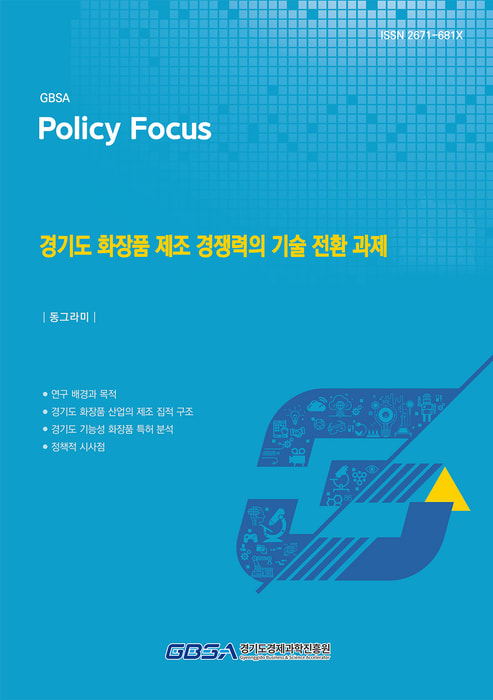
Is Gyeonggi Province, the Kingdom of Cosmetics Manufacturing, Only Good at ‘Moisturizing’ Technology?
It is a well-known fact that Gyeonggi Province is the largest cosmetics manufacturing hub in the country. However, does it also have the technological competitiveness to match its stature? According to recent analysis, the influence of patents and the technological impact relative to production scale do not meet expectations. This offers critical insights into the direction our cosmetics industry should take.
Current Status of Technological Competitiveness in the Gyeonggi Cosmetics Industry
The report “Challenges for Technological Transition in Gyeonggi’s Cosmetics Manufacturing Competitiveness” released by the Gyeonggi Institute of Science and Technology analyzed the correlation between the manufacturing-focused industrial structure and technological activities. Specifically, of the 23,877 functional cosmetics patents, 3,341 patents filed in Gyeonggi were scrutinized to deeply understand the regional characteristics of technological activities.
The analysis found that Gyeonggi Province, with 39.4% of the nation’s cosmetics manufacturers concentrated there, serves as the key base for product development and supply. However, the share of patents for functional cosmetics is only 14.0%, indicating that technological activities are relatively low compared to manufacturing density.
The market securing power and patent registration index remained at a satisfactory level, but the patent influence only reached the national average. This implies a lack of distinctiveness in terms of technological impact. This phenomenon is not unrelated to the fact that the technological accumulation in Gyeonggi’s cosmetics industry has been more focused on product-centric processes like process improvement and formulation development rather than original technology development.
Examining patent activities by functional group, active movements were found in moisturizing, wrinkle improvement, and anti-inflammatory areas. In contrast, the raw material and material-based technological fields like whitening and UV blocking showed relatively limited results, clearly revealing the limitations of technology development concentrated in specific areas.
Technological Transition Tasks for Ensuring Future Competitiveness
The Gyeonggi Institute of Science and Technology makes it clear that focusing only on expanding manufacturing is distinctly limited in enhancing the cosmetics industry’s competitiveness. Hence, a parallel approach that strengthens both technology accumulation and R&D capacity is deemed essential.
Establishing policy systems that can transform experience and know-how accumulated in the production field into proprietary technological assets is important and will serve as a foundation for the qualitative growth of the industry overall.
Furthermore, an urgent customized support strategy that thoroughly understands the characteristics of each functional field and prepares optimized support measures to bridge the technological gap is proposed as a critical task.
Kim Hyun-gon, Director of the Gyeonggi Institute of Science and Technology, states that this report sheds new light on the Gyeonggi cosmetics industry from a technological accumulation perspective. It is hoped that it will serve as a crucial foundational resource for understanding the region’s manufacturing-based industry more diversely and for establishing future policy directions.
This analysis will serve as an important opportunity to present a concrete roadmap for the Gyeonggi cosmetics industry to leap toward becoming a true ‘technology powerhouse’ through qualitative growth as well as quantitative growth.
In addition to technological innovation for the qualitative growth of the cosmetics industry, effectively communicating its excellent value in the market is important. Yuricos helps companies to widely communicate and enhance their competitive edge through professional blog marketing.
