“Driven by Automobiles, Pushed by Cosmetics”… 2025 Exports Reach a Record High of $118.6 Billion
Used Cars Shake the Market… Automobile Exports Surge by 76% in CIS, Middle East
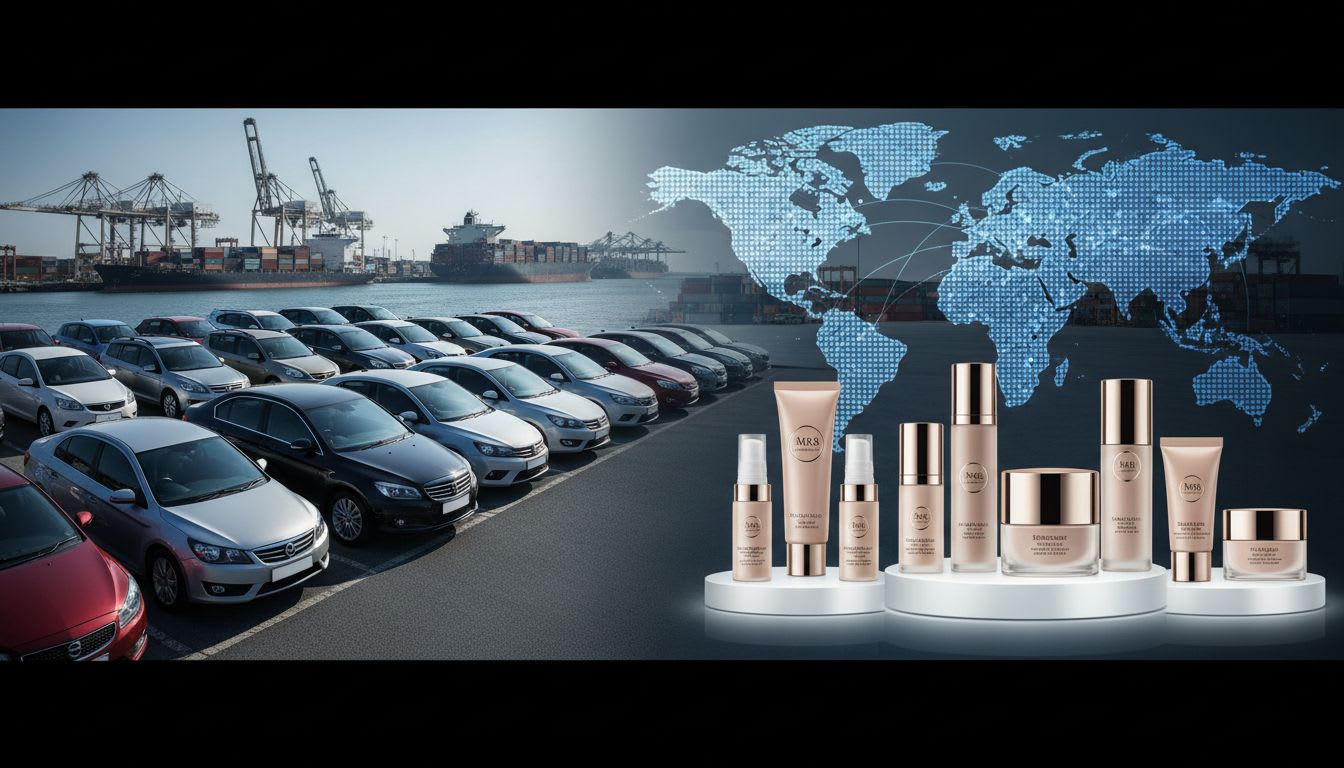
In 2025, SME exports hit a record $118.6 billion, marking a 6.9% increase from the previous year. This remarkable achievement demonstrates the impressive resilience of SMEs amidst challenging conditions such as global protectionism and tariff risks. Notably, automobiles and cosmetics have strongly driven export growth, contributing to both structural improvement and market diversification for SMEs. The number of companies involved in exports reached an all-time high of 98,219, with the second-half growth rate of +10.8% significantly surpassing the +2.8% growth in the first half, driving overall results.
Driven by Two Pillars of Record Growth
The key items that played a significant role in driving SME exports were undoubtedly used cars and K-beauty. These two categories broke away from past export formulas and provided new growth engines, proving the global competitiveness of SMEs.
Used Car Exports Hit an All-Time High
In 2025, SME automobile exports reached $8.97 billion, achieving an astounding 76.3% increase from the previous year and renewing all-time highs for three consecutive years. This marked the largest growth among all SME export categories, particularly thanks to the explosive demand for Korean used cars in the CIS and Middle Eastern markets. Kyrgyzstan saw a +106.0% increase, Kazakhstan +107.2%, and Russia +76.2%.
This growth extended to the Middle East and nearby countries such as the UAE (+91.2%) and Turkey (+130.7%), expanding the export map. Kyrgyzstan now stands firmly as the largest export destination for SME used cars. Moreover, the rapidly increasing share of electric vehicles (including hybrids) indicates significant enhancement in the product portfolio. While large enterprise car exports are hindered by tariffs, SME automobile exports have complemented overall export growth, highlighting this as a significant achievement.
K-Beauty Expands to Europe and the Middle East
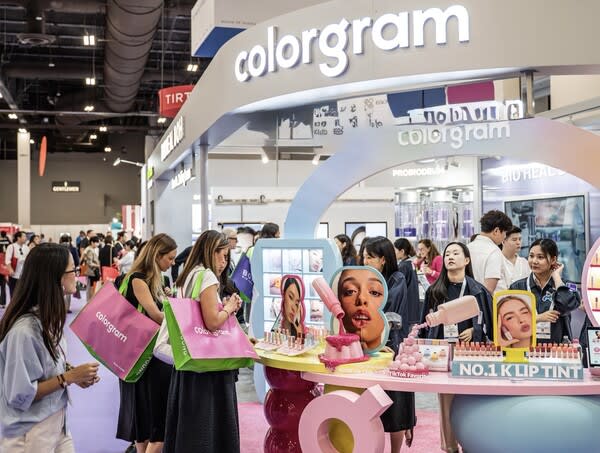
Cosmetics exports reached $8.32 billion, marking a 21.5% increase from the previous year and providing a strong second growth driver for SME exports after automobiles. Notably, the export structure has successfully expanded beyond the previously concentrated US and China markets to include the European Union (EU) and the Middle East, extending exports to 204 countries in total.
Exports to the EU showed growth of 77.6%, and 54.6% to the Middle East, proving K-beauty’s strength on the global stage. Within the US, the expansion of offline distribution channels and the popularity of K-beauty indie brands led to record-high performance, with competitive strengths further highlighted in consumer goods such as skincare, makeup, and face masks. The SME share in total cosmetics exports rose to 72.5%, contrasting with the decrease in large enterprise cosmetics exports. This demonstrates SMEs as the solid leaders of K-beauty’s global expansion.
SMEs Adapt to a Changing Global Market
SME exports have shown agility by reducing dependence on specific markets and proactively entering emerging markets, demonstrating flexibility with a diversified portfolio to effectively respond to global changes.
Restructuring Major Export Markets
Looking at individual country export trends, China saw an increase by 5.5% to $18.9 billion, returning to growth after three years and regaining its position as the largest destination for SME exports, with consistent growth in consumer goods and intermediates like cosmetics, copper products, and plastics. US exports maintained stability at $18.28 billion with a -0.6% flat rate, relying on cosmetics and power equipment exports to offset tariff uncertainties.
In contrast, Vietnam recorded -1.5% and Mexico -4.6%, with some production bases entering adjustment phases. Regionally, the CIS showed +37.3%, the Middle East +14.1%, Hong Kong +50.1%, and Taiwan +21.4%, highlighting strong growth in emerging replacement markets.
Diversification of Items, SMEs’ Strength
The concentration of the top 10 items remains at 36.1%, showing greater distribution of products compared to large enterprises, a structural strength of SME exports. This indicates SMEs’ flexibility to expand product lines in response to diverse market demands, effectively establishing a foundation to respond to changes in the global trade environment.
New Pillar for Sustainable Growth
The record-high performance of SME exports in 2025 clearly showed the dual leading roles played by automobiles centered on used cars and cosmetics centered on K-beauty. This signifies a shift from a production and intermediate goods-centered export structure to one focused on consumer goods and distribution exports.
It also underscores significant expansion into emerging markets such as CIS, the Middle East, and Europe from the previously concentrated China and US markets. Despite the challenging conditions of sustained tariffs and trade risks, the agile market response and bold item diversification strategies of SMEs were key drivers in export recovery. Such structural changes are evaluated as establishing a new pillar for the sustainable growth of SME exports.
The record-high SME export performance in 2025 clearly showcases the resilience of SMEs in actively adapting to global market changes. Especially, the advancement of K-beauty proves that domestic SMEs possess world-class competitiveness in the consumer goods sector. These achievements will serve as an important foundation for sustained strong growth of SME exports, further expanding into a wider range of products and markets.
As the successful global expansion of K-beauty has demonstrated the potential of domestic SMEs, will continue to provide reliable marketing solutions to help cosmetic companies achieve sustained success in overseas markets.
