Japan’s Pollen Season: Skincare Solutions for Increasing Skin Sensitivity Are Now Essential
When pollen fills the air, skin sensitivity symptoms are often considered a typical seasonal change among Japanese consumers. Especially with yuragi skin, sensitivity and dryness repeat, making season-specific management an integral part of skincare routines.
Seasonal Yuragi Skin: A Widespread Phenomenon Across Japan
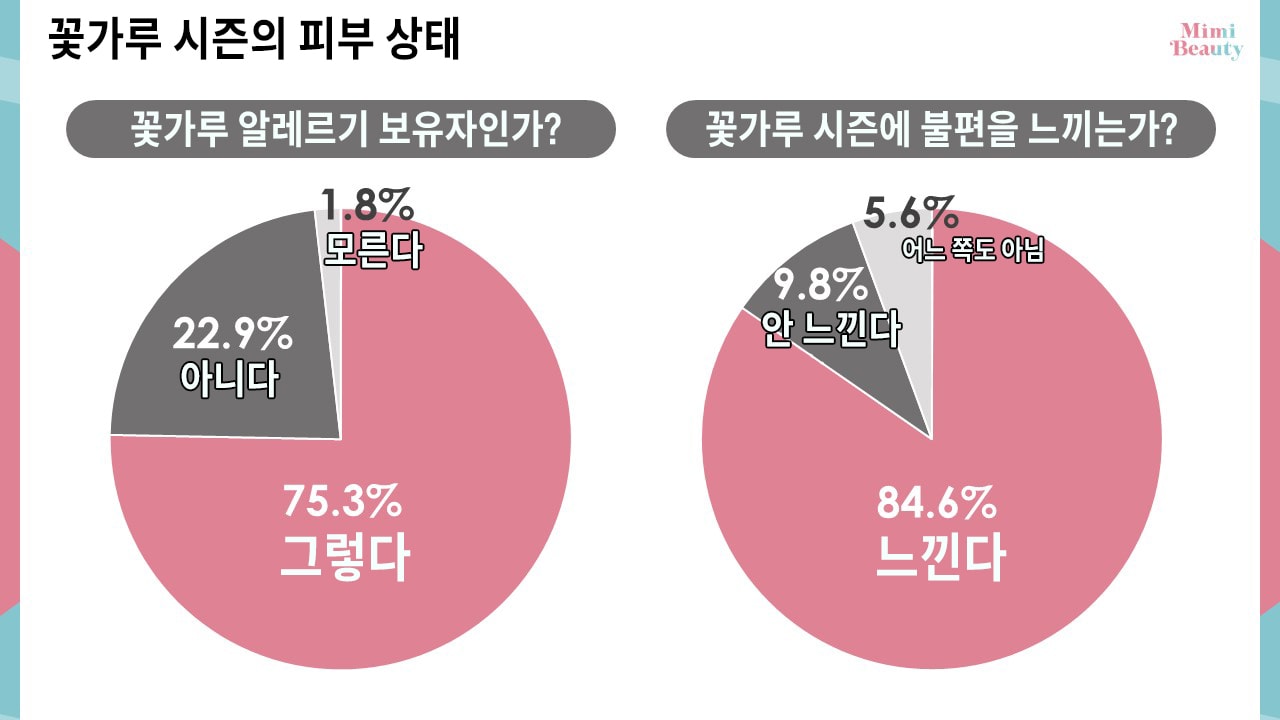
From the onset of spring pollen, many in Japan report sensitive skin issues. A survey by Japanese beauty media Mimi Beauty reveals that it’s not limited to those with inherently sensitive skin but has become a widespread seasonal skin condition. According to the survey, 75.3% of respondents identified as having pollen allergies, and a striking 84.6% experienced skin discomfort during the pollen season.
“When pollen season starts, my skin becomes sensitive, and I experience simultaneous dryness, itching, and redness, leading to unstable skin conditions.”
This state of imbalance is encapsulated in the term ‘yuragi skin (ゆらぎ),’ referring to temporarily fluctuating skin conditions due to seasonal changes or external factors, even affecting normally problem-free skin.

Characteristics of Yuragi Skin: Complex Symptoms
During pollen season, skin reactions encompass more than a single sensitive symptom. According to the survey, 72.2% reported their skin becoming more sensitive than usual, with 71.9% experiencing roughness and redness. Additionally, ‘itching’ (67.3%) and ‘dryness’ (66.0%) were commonly reported concurrent symptoms.
The overlapping occurrence of these symptoms is attributed to simultaneous irritation responses, moisture deficiency, and weakened skin barriers. The survey report defines yuragi skin as follows:
“Yuragi skin points to a complex instability within the skin itself, requiring sensitivity to external stimuli and continuous moisturizing and protection.”
This context explains why yuragi skin in Japan is perceived not merely as a skin issue but as a key component of seasonal health management.
Japanese Skincare Response Patterns: Intensive Care from February to May
Japanese consumers exhibit specific skincare patterns to address seasonal skin changes. According to the survey, about 92.3% are aware of yuragi skin issues and actively manage them with tailored skincare practices.
The onset of these routines generally occurs in February and March, primarily aiming to preempt pollen exposure. The survey results show:
- Proportion initiating care in February – 35.4%
- Proportion starting in March – 34.2%
Intensive care extends into May, with 44.1% continuing the regimen through April and 30.8% extending to May. A clearly defined pattern emerges, which involves proactive measures before pollen season and maintaining vigilance until its end.
Changing Product Selection Criteria: Focus on Sensitivity, Intense Moisturizing, and Blocking External Stimuli
Consumers have become precise in choosing skincare products for managing yuragi skin. The survey highlights the top criteria driving product selection:
- Choosing products for sensitive skin – 65.8%
- Products with intense moisturizing properties – 64.8%
- Features to block pollen and other external stimuli – more than half of respondents
Thus, there is a shift in actual skincare items used. 68.5% reported using sensitive and low-irritation toners, with lotions and creams at 52.1%, and pollen-blocking mists at 46.4%. Consumers are expanding interest beyond mere skin hydration to solutions that physically block external stimuli.
` provides cosmetics that are effective in managing sensitive skin even during pollen season. Protect both the health and beauty of your skin with trusted products.
